
Your Calf Muscles: The “Second Heart” How Yoga and Ayurveda Support Circulation and Healthy Aging
Why Should Yoga Teachers and Health Enthusiasts Study Ayurveda and Integrate It into Their Careers and Personal Practice?
When we think about heart health, we often focus on cholesterol, blood pressure, or cardiovascular exercise. However, another important contributor to healthy circulation is frequently overlooked—your calf muscles.
Often called the “second heart,” the calf muscles help pump blood from the legs back toward the heart. Every step you take activates these muscles, supporting circulation, energy, and overall health. This modern understanding aligns beautifully with the principles of Ayurveda and Yoga, both of which emphasize movement, balance, and circulation as foundations of well-being.
Why Are Calf Muscles Called the “Second Heart”?
Unlike arteries, which receive blood directly from the heart, veins in the legs must work against gravity to return blood upward. The calf muscles act as a natural pump.
When you walk, climb stairs, or flex your ankles:
The calf muscles contract.
Blood is pushed upward through the veins.
One-way valves prevent blood from flowing backward.
Without regular movement, circulation can become sluggish, leading to:
Heavy or tired legs
Swollen feet and ankles
Muscle stiffness
Fatigue
Reduced mobility
Modern lifestyles often involve prolonged sitting at desks, in cars, or in front of screens, which reduces calf muscle activity and impairs circulation. One of the simplest remedies is to stand up and move every hour, even for a few minutes.
Ayurveda: Movement as Preventive Medicine
Ayurveda teaches that health depends upon the proper flow of energy, nutrients, and waste products throughout the body. Stagnation is viewed as a precursor to imbalance and disease.
The Ayurvedic concept of Dinacharya (daily routine) encourages:
Regular exercise appropriate to one's constitution
Walking
Stretching
Self-massage (Abhyanga)
Mindful movement practices
Rather than waiting for illness to develop, Ayurveda promotes daily habits that support circulation, vitality, and longevity.
Yoga and the “Second Heart”
Yoga provides an ideal combination of strengthening, stretching, balance, and mindful breathing. Many yoga postures activate the calf muscles while enhancing circulation and nervous system balance.
When yoga is practiced according to Ayurvedic principles and adapted to an individual's dosha (constitution), its therapeutic effects become even more powerful.
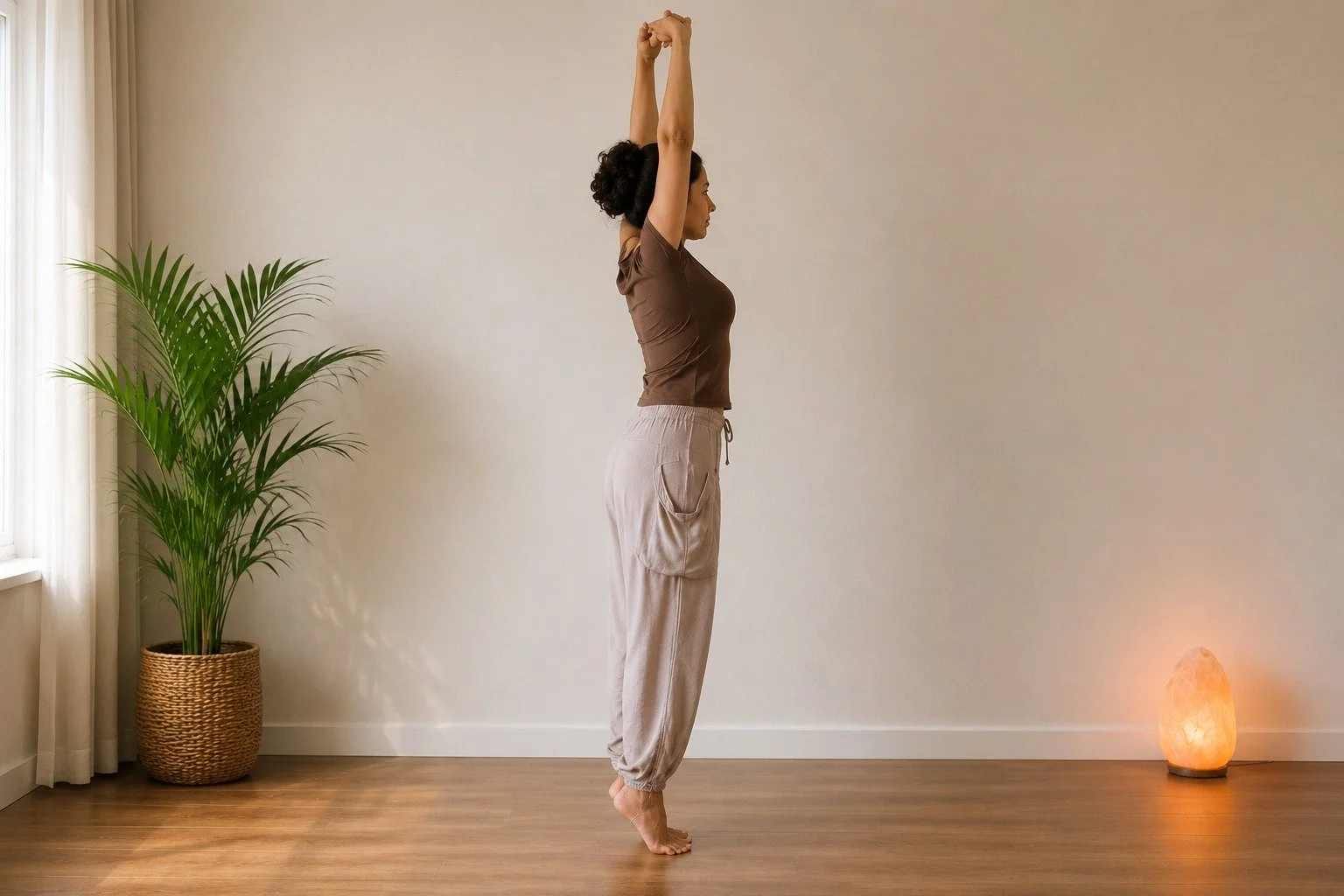
1. Mountain Pose (Tadasana)
Tadasana promotes proper posture, grounding, and awareness of the legs. Rising onto the toes strengthens the calf muscles and improves balance.
Ayurvedic Benefits
Promotes stability and grounding
Supports Prana Vayu and Vyana Vayu
Helps reduce anxiety and mental restlessness
Vata: Focus on grounding and slow breathing.
Pitta: Relax the shoulders and soften effort.
Kapha: Engage the legs actively and lift through the chest.
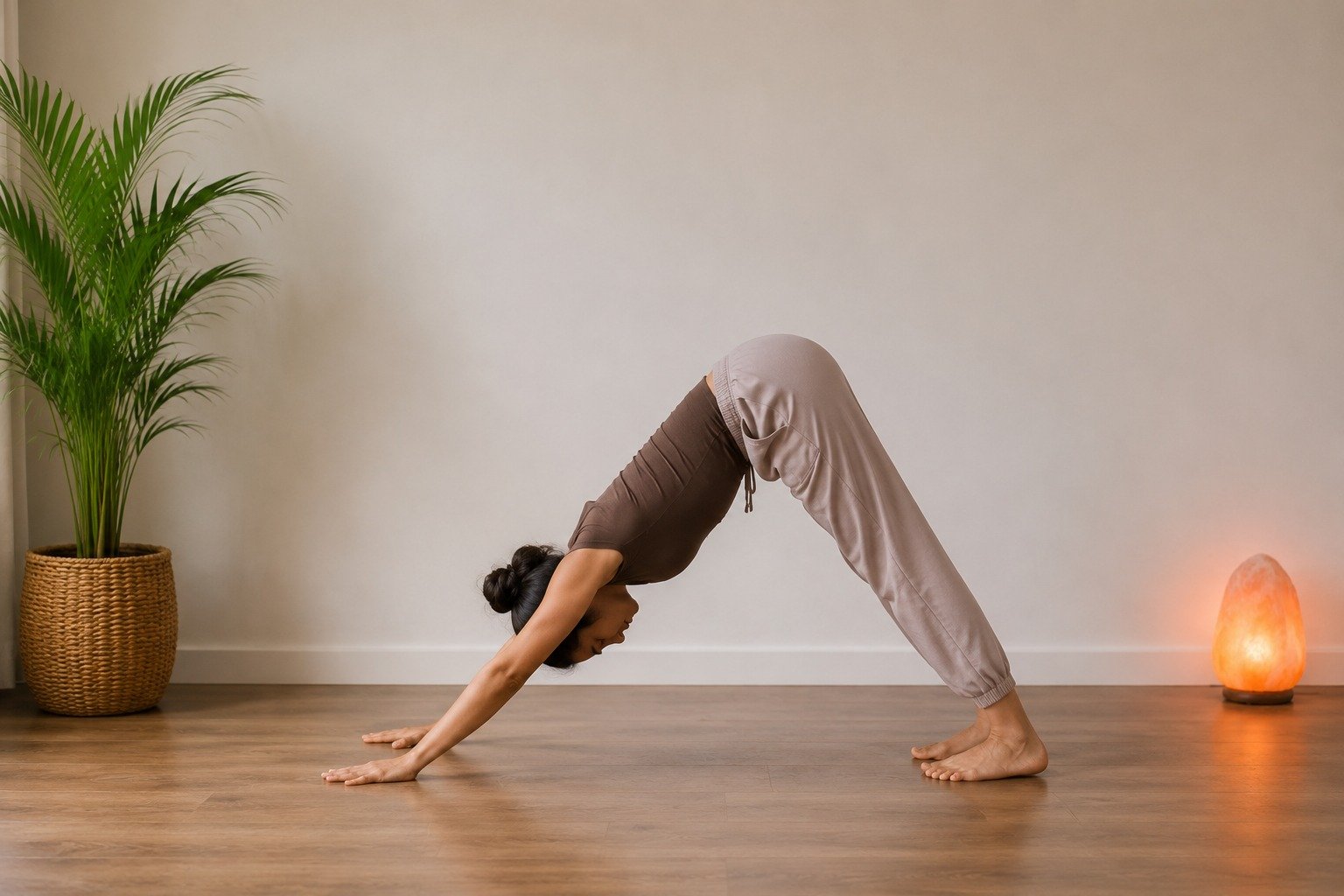
2. Downward-Facing Dog (Adho Mukha Svanasana)
This classic pose stretches the calves and hamstrings while encouraging healthy blood flow throughout the body.
Ayurvedic Benefits
Balances all three doshas
Supports circulation through Vyana Vayu
Calms the mind and improves focus
Dosha Modifications
Vata: Bend the knees slightly and hold gently.
Pitta: Avoid forceful stretching.
Kapha: Hold longer and practice dynamically.
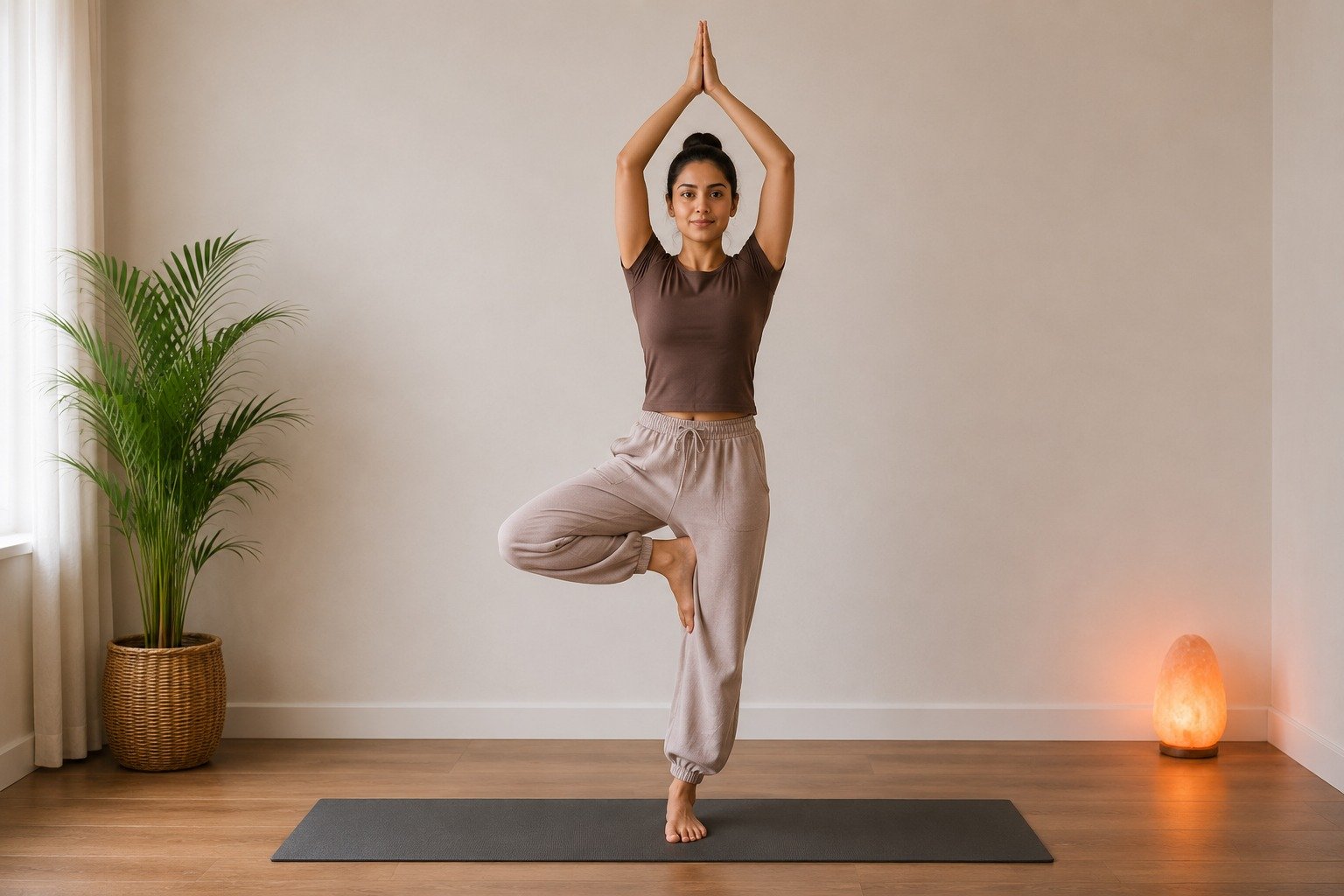
3. Tree Pose (Vrikshasana)
Balancing on one leg activates the calf muscles while improving coordination and concentration.
Ayurvedic Benefits
Excellent for balancing Vata
Strengthens focus and mental steadiness
Supports Prana and Vyana Vayu
Dosha Modifications
Vata: Practice near a wall if needed.
Pitta: Focus on ease rather than perfection.
Kapha: Hold longer and raise the arms overhead.
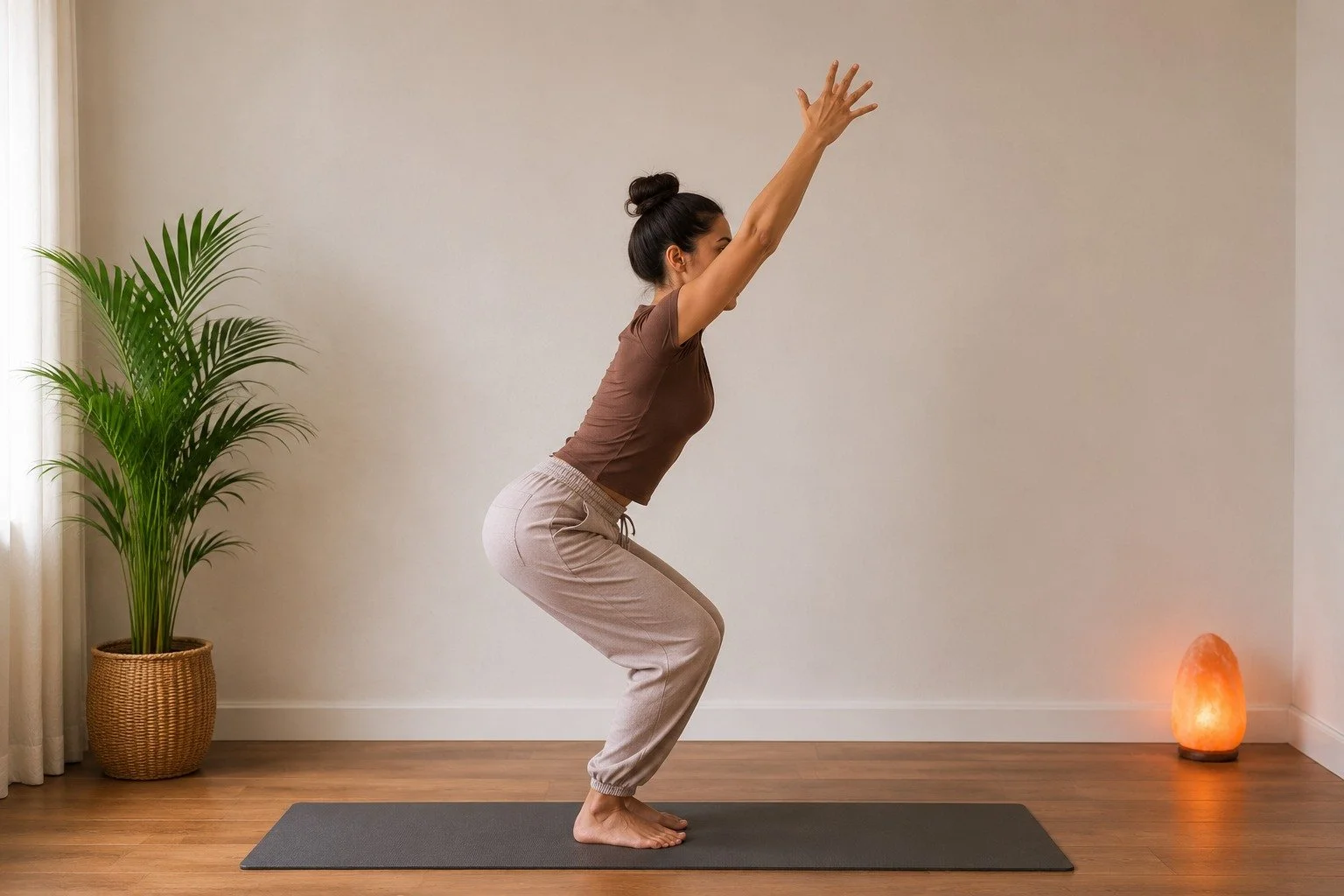
4. Chair Pose (Utkatasana)
Chair Pose strengthens the lower body, including the calves, while building endurance and stability.
Ayurvedic Benefits
Particularly beneficial for Kapha
Stimulates circulation and generates heat
Supports Apana Vayu and lower-body strength
Dosha Modifications
Vata: Hold briefly and avoid fatigue.
Pitta: Practice moderately.
Kapha: Hold longer and repeat several rounds.
5. Walking Meditation
Walking meditation transforms a simple activity into a healing practice.
Benefits include:
Activation of the calf muscle pump
Improved circulation
Reduced stress
Greater mindfulness
Even a daily 20–30 minute walk can significantly support cardiovascular and circulatory health.
The Ayurvedic View of Circulation and Healthy Aging
In Ayurveda, healthy circulation depends upon:
Proper hydration
Balanced nutrition
Regular movement
Healthy flow of Prana and Vyana Vayu
When circulation is functioning well, tissues receive nourishment efficiently, and waste products are removed effectively.
Simple Daily Habits to Support Your “Second Heart”
Small habits practiced consistently can make a significant difference:
Walk 20–30 minutes daily.
Stand up and move every hour.
Perform calf raises during work breaks.
Practice yoga regularly.
Stretch after prolonged sitting.
Stay hydrated.
Follow a balanced Ayurvedic daily routine.
Final Thoughts
The calf muscles truly deserve their reputation as the body's “second heart.” By helping pump blood back to the heart, they play a critical role in maintaining healthy circulation, energy, and mobility.
Combining regular walking, yoga, mindful breathing, and Ayurvedic lifestyle practices can help keep this natural pump functioning optimally throughout life. These simple practices support not only circulation but also overall vitality and healthy aging.
Sometimes, the path to a healthier heart begins with one mindful step at a time.

